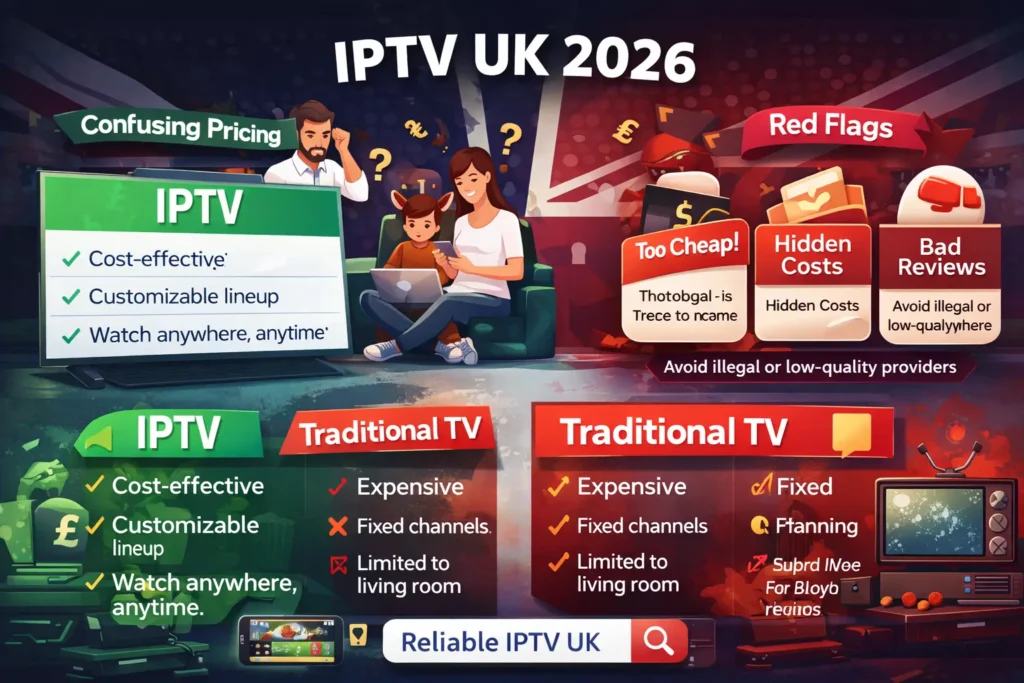
When TV in the UK quietly stopped making sense
For many people in the UK, TV just started feeling off. Bills kept rising, channel lists kept expanding, yet most of that content went untouched. Paying more while watching less became normal, and that frustration is where IPTV UK 2026 begins to resonate.
What’s driving the shift isn’t tech hype, it’s value. Viewers want flexibility, not fixed bundles that don’t match real habits. IPTV answers that by letting people focus on what they actually watch. For a wider look at how this change is spreading nationwide, this overview of IPTV usage across the United Kingdom puts the trend into perspective.
Once people understand their own viewing habits, choosing an IPTV service becomes far simpler and far more practical.

Why the UK is slowly moving on from traditional TV
Before getting deeper, a few things are already clear. The way people watch TV in the UK doesn’t look like it did a few years ago. Costs went up, flexibility stayed low, and patience ran out. That’s the background where IPTV UK 2026 keeps gaining attention.
What viewers are actually reacting to
The problem isn’t television itself, it’s the way it’s sold.
People in the UK are stepping away from traditional TV mainly because:
- Monthly bills keep rising without real added value
- Channel bundles include far more content than anyone watches
- Schedules feel rigid compared to modern streaming habits
IPTV answers those frustrations by flipping the model. Instead of forcing viewers into fixed packages, it adapts to how people already watch.
Why IPTV feels more natural in 2026
In IPTV UK 2026, control is the real upgrade. Viewers choose what matters to them and ignore the rest. Live TV, on-demand content, and catch-up options sit in one place without forcing a routine.
Another major factor is cost awareness. Many UK households realised they were paying premium prices for unused channels. IPTV pricing models tend to be simpler and easier to adjust, which makes budgeting feel less stressful.
For a broader explanation of how IPTV fits into the UK market today, this guide to IPTV services in the United Kingdom breaks it down clearly.
Key takeaways worth keeping in mind
- Traditional TV is losing ground because it no longer fits modern habits
- IPTV offers flexibility that fixed packages can’t match
- Understanding your own viewing habits prevents overpaying
- Smart research leads to better long-term value
This shift isn’t about trends. It’s about viewers finally choosing systems that work the way they do.

Why IPTV pricing feels confusing until you see it clearly
A lot of people think IPTV pricing is complicated. In reality, it only feels that way when plans aren’t explained properly. With IPTV UK 2026, the difference comes from transparency. Once prices are laid out in a simple way, things start to make sense.
Below is a clear overview of how pricing is structured on one platform, without hiding anything behind vague labels or unnecessary extras.
BritishIPTVSub subscription plans at a glance
| Plan name | Duration | Price | Best for | Key features |
|---|---|---|---|---|
| Starter | 1 Month | £9.95 | New users | Any device support, live TV, VOD, EPG, 7‑day refund |
| Standard | 3 Months | £23.99 | Regular viewers | Multi-quality streaming, daily updates, stable servers |
| Express | 6 Months | £34.99 | Consistent users | Better long-term value, strong stability |
| Premium | 12 Months | £49.99 | Heavy viewers | Ultra HD / 4K, priority support, built‑in privacy features |
All plans are designed as one-time payments, which avoids recurring surprises. Features scale naturally with duration instead of forcing upgrades.
If you want to review the full breakdown directly, the official British IPTV subscription pricing page shows each plan exactly as offered.
Why this pricing model works in 2026
What makes this structure work for IPTV UK 2026 users is simplicity. Short plans allow testing without risk, while longer plans reward commitment without locking people into confusing contracts.
Most overpayment happens when users skip comparisons or commit too early. When pricing is clear from the start, IPTV becomes predictable, not stressful.

Red flags that usually mean trouble
By the time most people reach this stage, they’ve already seen a few offers that feel too good. In IPTV UK 2026, that instinct is usually right. Ultra-low prices often come with shortcuts, and shortcuts tend to show up later as buffering, disappearing channels, or sudden shutdowns.
Things that should immediately raise questions:
- Prices that are far below the normal market range
- No clear explanation of what the plan includes
- No visible support or slow responses when you ask questions
- Promises that sound exaggerated without details
A reliable IPTV service doesn’t hide behind vague wording. It explains what you get and what you don’t, clearly.
Budget, mid-range, and premium, what actually changes
Not all IPTV UK 2026 plans are meant for the same type of viewer. The difference isn’t just price, it’s comfort over time.
Budget plans usually suit light users. They work, but with limits. Mid-range options are where most people feel comfortable, better stability, better quality, fewer compromises. Premium plans are for viewers who want consistency, higher stream quality, and less troubleshooting.
In IPTV UK 2026, overpaying often happens when people jump straight to premium without knowing what they really need. Starting balanced and adjusting later is usually smarter.
The technical side people underestimate
A lot of streaming issues get blamed on the service when the real cause sits at home. IPTV UK 2026 depends heavily on how well your setup matches your usage.
What makes the biggest difference:
- Devices that can actually handle modern streaming apps
- Enough memory and processing power to avoid lag
- Internet speed that matches the quality you choose
Smart TVs, Android-based devices, and modern streaming boxes tend to perform best when properly configured.
Internet speed, the quiet deal-breaker
Smooth streaming isn’t about extreme speeds, it’s about stability. SD content can work on modest connections. HD needs more breathing room. 4K only feels good when the connection is strong and consistent.
Wired connections usually outperform Wi-Fi, especially during busy hours. Small changes here often solve problems people assume are service-related.
If you want practical answers to common setup and performance questions, this UK IPTV FAQ section covers the basics without technical overload.
In IPTV UK 2026, the best experience comes from balance, realistic expectations, the right plan, the right device, and a connection that can keep up.
Common IPTV mistakes people keep repeating
The IPTV UK 2026 scene is bigger than ever, and that’s exactly why many people still get it wrong. In IPTV UK 2026, mistakes don’t usually come from lack of options, they come from rushing the decision.
When price becomes the only factor
The cheapest option always looks tempting. But price alone rarely tells the full story.
What often happens:
- Streams freeze when traffic increases
- Quality drops during peak hours
- Channel access feels inconsistent
A slightly higher price often brings stability, better stream quality, and fewer headaches. In IPTV UK 2026, value matters more than the lowest number on the page.
Skipping the fine print
Another common issue is ignoring how subscriptions actually work.
People forget to check:
- How long the plan lasts
- Whether refunds are clearly explained
- How easy it is to switch or stop
Services that explain this upfront usually cause fewer problems later.
Underestimating support and reputation
Everything works fine until it doesn’t. That’s when support matters.
Reliable IPTV services tend to have:
- Clear contact options
- Fast responses when issues appear
- A reputation built over time, not hype
If you want to understand what reliable providers usually offer and what to expect before subscribing, this UK IPTV subscription guide breaks things down in a practical way.
Making a value-driven IPTV decision
The smartest choices in IPTV UK 2026 come from balance. Understanding your habits, choosing a plan that fits them, and avoiding shortcuts that look good on paper but fail in real use.
When quality, reliability, and support align, IPTV stops being a risk and becomes a long-term upgrade. The goal isn’t perfection, it’s consistency. And that’s what separates a good decision from an expensive mistake.
FAQ – Real questions people ask before choosing IPTV
What exactly is IPTV and how does it work in the UK?
IPTV simply delivers TV content through the internet instead of cables or satellites. In the UK, this means streams are sent directly to your device as long as your internet connection is stable. In IPTV UK 2026, this approach fits naturally with how people already consume content online.
Why are people switching from traditional TV to IPTV?
Most viewers switch because they want flexibility. IPTV allows on-demand viewing, easier access across devices, and fewer limitations compared to fixed TV schedules. Cost control is another big reason people explore IPTV UK 2026 options.
What internet speed is actually needed for IPTV?
You don’t need extreme speeds, but stability matters. SD viewing works on modest connections, HD needs stronger bandwidth, and 4K only feels comfortable on fast, consistent internet. Many issues blamed on services are actually connection-related.
Are there extra costs people should watch out for?
Some services add fees for features, devices, or longer plans. Reading what’s included before subscribing helps avoid surprises. Clear pricing usually signals a more reliable service.
Can IPTV be used on more than one device?
Yes, most services support TVs, phones, tablets, and streaming devices. Limits depend on the plan, so it’s worth checking how many devices you can use at once before choosing.
How do you spot a reliable IPTV service in the UK?
Look for clear information, realistic pricing, and accessible support. Services that explain how they work tend to perform better long-term. For common concerns and quick answers, this UK IPTV FAQ page covers what most users want to know.
Which devices are commonly used for IPTV in the UK?
Smart TVs, Android-based devices, and modern streaming boxes are the most common choices. These devices handle IPTV apps smoothly when properly set up.
Is it possible to get a refund if the service isn’t right?
Refund policies vary. Some providers allow testing periods, others are stricter. Always review the refund terms before committing, especially when choosing long plans in IPTV UK 2026.