
How TV Habits Quietly Changed in the UK
Television in the UK doesn’t feel the way it used to. Fixed schedules slowly lost their appeal, buffering became a familiar frustration, and flexibility started to matter more than channels.
That shift explains why iptv subscriptions began to feel natural rather than trendy. Streaming over the internet gave viewers control over when and how they watch.
In simple terms, iptv subscriptions deliver live and on-demand television through an internet connection instead of satellite or cable. Across the UK, this model keeps growing as people look for fewer limits and more freedom.
To see how this approach is structured for UK users, the British IPTV subscription platform offers a clear starting point.

What IPTV Actually Is (Without the Tech Headache)
Television habits in the UK didn’t change overnight. They shifted because people wanted simplicity and control. That’s where iptv subscriptions started to fit naturally into everyday viewing.
At a basic level, IPTV delivers live television and on-demand content through an internet connection instead of satellite or cable. The idea is simple, the experience is flexible, and the viewer stays in control.
What defines IPTV in practice:
- Content delivered over the internet, not broadcast signals
- Live TV and on-demand viewing in one place
- No dependence on fixed schedules
How Internet-Based TV Changes the Experience
The biggest difference isn’t technology, it’s behaviour. Traditional TV tells you when to watch. IPTV lets you decide.
How delivery differs from traditional TV:
- Viewers choose what to watch and when
- Content starts on demand, not on a timetable
- Streams adapt to modern viewing habits
| Aspect | IPTV Streaming | Traditional TV |
|---|---|---|
| Content delivery | Internet-based | Satellite or cable |
| Viewing style | On-demand or live | Fixed schedules |
| Device access | Multiple devices | Mostly TV only |
Why IPTV Subscriptions Matter to UK Viewers
UK viewers don’t just want more content, they want fewer restrictions. That’s why iptv subscriptions keep growing in popularity.
What UK viewers value most:
- Freedom to watch on their own schedule
- Access across TVs, phones, and computers
- A viewing experience that fits daily routines
Multi-device access means content follows the viewer instead of staying locked to one screen. For many households, that convenience is what makes iptv subscriptions a practical choice rather than an experiment.
For a clearer breakdown of how iptv subscriptions are usually structured in the UK and what to expect before choosing one, this UK IPTV subscription guide explains the essentials without unnecessary complexity.
Once television adapts to your routine instead of interrupting it, going back to rigid schedules feels outdated.
Pricing Expectations and Choosing the Right Providers
When people in the UK look at iptv subscriptions, pricing is usually the moment of truth. Not because cheaper is always better, but because long‑term value matters once the service becomes part of daily viewing.
Rather than focusing on promises, it helps to look at how providers actually structure their plans and price ranges.
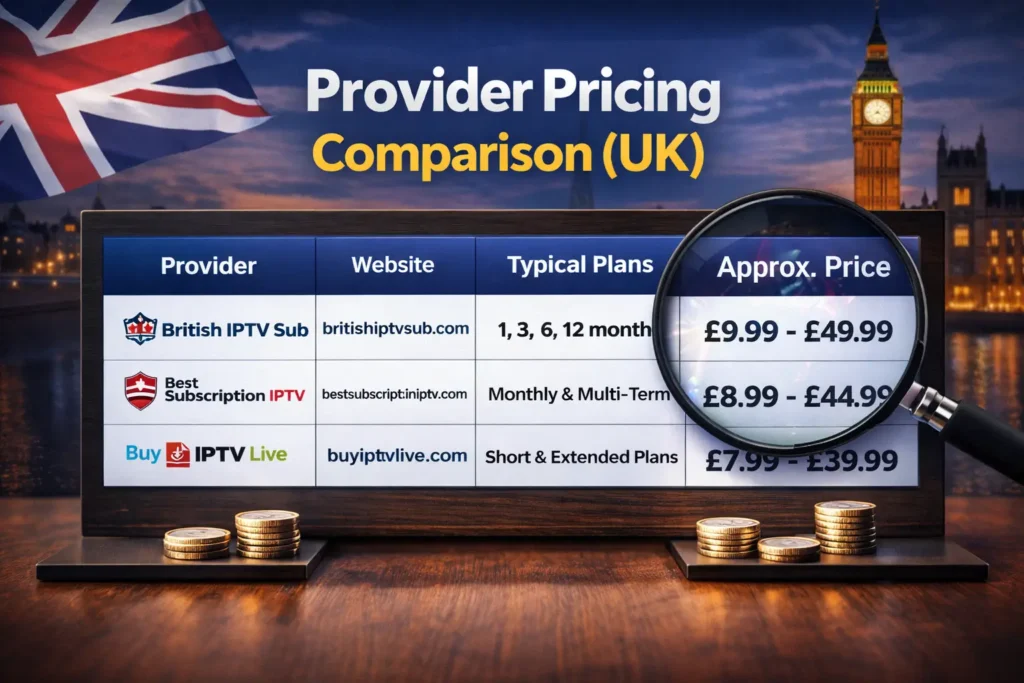
Provider Pricing Comparison (UK)
| Provider | Website | Common Plans | Typical Price Range | Best For |
|---|---|---|---|---|
| British IPTV Sub | https://britishiptvsub.com | 1, 3, 6, 12 months | £9.99 – £49.99 | UK users looking for stable, long‑term use |
| Best Subscription IPTV | https://bestsubscriptioniptv.com | Monthly & multi‑term plans | £10.99 – £54.99 | Users comparing value over time |
| Buy IPTV Live | https://buyiptvlive.com | Short & extended plans | £12.99 – £59.99 | Users who prefer testing before committing |
These price ranges give a realistic idea of what iptv subscriptions usually cost in the UK market, without exaggeration or hidden surprises.
How UK Users Read Pricing
Most viewers don’t compare plans line by line. They ask simpler questions:
- Does the service stay stable after a few weeks?
- Is the price justified by daily use?
- Can the plan scale if more devices are added?
Once a provider proves reliable, pricing becomes secondary. At that point, iptv subscriptions stop feeling experimental and start feeling like a normal part of everyday television.
How to Set Up IPTV Streaming in Your Home
Configuring IPTV streaming at home involves choosing the right devices and ensuring a stable internet connection. To get started, you'll need to consider a few key factors that will ensure a smooth viewing experience.
Internet Requirements for Smooth Streaming
A stable and fast internet connection is crucial for IPTV streaming. A minimum speed of 25 Mbps is recommended for HD streaming, while 50 Mbps or more is ideal for 4K content. Ensuring your internet plan meets these requirements is the first step.
Connecting Your First Device
To connect your first device, you'll need to choose a compatible IPTV device. Popular options in the UK include smart TVs, mobile devices, and dedicated IPTV boxes. Simply download the IPTV app, log in with your subscription details, and start streaming.
Creating Multiple Viewing Points
To create multiple viewing points, you can connect additional devices to your IPTV subscription. This allows you to watch your favourite channels in different rooms or on different devices. Ensure that all devices are connected to the same internet network for a seamless experience.
| Device | Compatibility | Streaming Quality |
|---|---|---|
| Smart TV | High | HD/4K |
| Mobile Device | High | HD |
| Dedicated IPTV Box | High | HD/4K |
By following these steps, you can enjoy IPTV streaming throughout your home, on multiple devices, and with a high-quality viewing experience.
UK Viewing Habits and How IPTV Accommodates Them
The UK's viewing habits are undergoing a significant transformation, driven by technological advancements and changing consumer preferences. This shift is particularly evident in the way people consume television, with a growing demand for more flexible and personalized viewing experiences.
Changing Patterns in Home Entertainment
The traditional TV viewing experience is evolving. With IPTV subscriptions, viewers can now access a wide range of channels and on-demand content directly through their internet connection. This flexibility allows for a more personalized viewing experience, with the ability to pause, rewind, and record live TV. Some key benefits include:
- Access to a broader range of content
- Personalized viewing experiences
- The ability to watch on multiple devices
On-the-Go Viewing Trends
The rise of mobile devices has led to an increase in on-the-go viewing. IPTV services cater to this trend by providing apps and services that allow users to watch their favorite shows and channels anywhere, anytime. This is particularly appealing to a demographic that values flexibility and mobility. Key aspects include:
- Mobile apps for on-the-go viewing
- Multi-device support
- Seamless viewing experience across different platforms

Getting the Best Streaming Quality at Home
When iptv subscriptions are running smoothly, most people don’t even think about quality. It just works. Problems usually appear when one small detail is overlooked, often the internet connection or the device being used.
What usually makes the biggest difference:
- A stable broadband connection rather than peak speed alone
- Devices that aren’t overloaded with background apps
- Network settings that don’t compete with streaming traffic
For UK viewers, consistency matters more than chasing perfect numbers.
Simple Internet and Network Tweaks
A reliable connection is the foundation of all iptv subscriptions. HD viewing generally feels comfortable once the connection stays steady, while higher quality streams benefit from extra headroom.
Practical optimisation steps:
- Test broadband speed during evening hours, not just off-peak times
- Restart routers occasionally to clear congestion
- Use a wired Ethernet connection when possible
- Prioritise streaming traffic if your router supports it
Small adjustments often remove buffering without changing the service itself.
| Optimisation Area | What to Adjust | Result |
|---|---|---|
| Internet speed | Check real-world performance | Fewer pauses |
| Device software | Keep systems updated | Smoother playback |
| Network setup | Reduce Wi-Fi interference | Better stability |
Choosing the Right Devices for IPTV Subscriptions
One reason iptv subscriptions continue to grow in the UK is flexibility. Viewing isn’t locked to a single screen anymore.
Common device choices:
- Smart TVs for comfortable long sessions
- Streaming sticks or boxes for simple plug-and-play setups
- Phones and tablets for on-the-go access
- Computers for flexible, browser-based viewing
The best device is the one that fits how you actually watch, not the most powerful option available.
Keeping Devices Running Smoothly
Device performance has a direct impact on iptv subscriptions. Regular updates, occasional restarts, and avoiding unnecessary background tasks help maintain a stable experience.
For users who want a clear walkthrough on setting things up correctly across different devices, these UK IPTV installation tutorials explain common setups step by step without overcomplicating the process.
Once the connection and device are aligned, iptv subscriptions tend to fade into the background, which is exactly how good streaming should feel.

Computers, Laptops, and Living‑Room Devices
Flexibility is one of the main reasons iptv subscriptions continue to grow in the UK. Watching isn’t limited to one type of screen, and people tend to choose devices based on comfort rather than technical limits.
Common ways people watch:
- Computers and laptops through web-based players or simple software
- Dedicated IPTV boxes for a stable, TV‑focused setup
- Streaming sticks for quick plug‑and‑play use
Each option has its place. Laptops work well for flexibility, while dedicated boxes are often chosen by viewers who want a smooth, no‑nonsense living‑room experience.
Paid vs Free IPTV: What UK Viewers Notice Quickly
At some point, most people compare paid services with free options. On paper, free streams sound tempting. In practice, the experience usually tells a different story.
How the two compare in real use:
- Paid services tend to be more stable over time
- Free options often struggle during busy hours
- Support and consistency are rarely equal
| Service Type | Stability | Support Level |
|---|---|---|
| Paid IPTV | High and predictable | Structured help |
| Free IPTV | Inconsistent | Limited or none |
Another factor many viewers consider is peace of mind. Paid services operate more transparently, while free options often come with uncertainty around availability and reliability.
Making the Right Choice for Your Viewing Habits
Choosing between different iptv subscriptions comes down to how you actually watch TV. Some people watch occasionally, others rely on it daily. The right option is the one that fits your routine without creating friction.
Things UK viewers usually think about:
- How often they watch during peak hours
- Which devices they use most
- Whether consistency matters more than saving a few pounds
Once these questions are clear, the choice usually becomes obvious.
For answers to common setup and usage questions before deciding, the IPTV FAQ section covers practical points without unnecessary detail.
Final Thoughts
When everything is aligned, iptv subscriptions stop feeling like a technical setup and start feeling like normal television again, just without the limitations. The best experience isn’t about chasing features, it’s about choosing something that quietly fits into everyday life.
Frequently Asked Questions
What makes IPTV different from traditional TV?
It delivers content over the internet instead of fixed broadcast systems, allowing more flexibility and on‑demand access.
Can IPTV be watched on multiple devices?
Yes. Most setups work across TVs, computers, mobile devices, and dedicated boxes.
Is a fast internet connection required?
Stability matters more than raw speed. A consistent connection usually delivers the best results.
Are free IPTV options reliable in the UK?
Some exist, but many users find paid services more predictable and easier to rely on long term.
DMCA Disclaimer
This website does not host, stream, or store any video or media content. All information provided is for educational and informational purposes only. We are not responsible for third‑party services or external content accessed through links. Users are responsible for ensuring compliance with local laws and regulations.
