
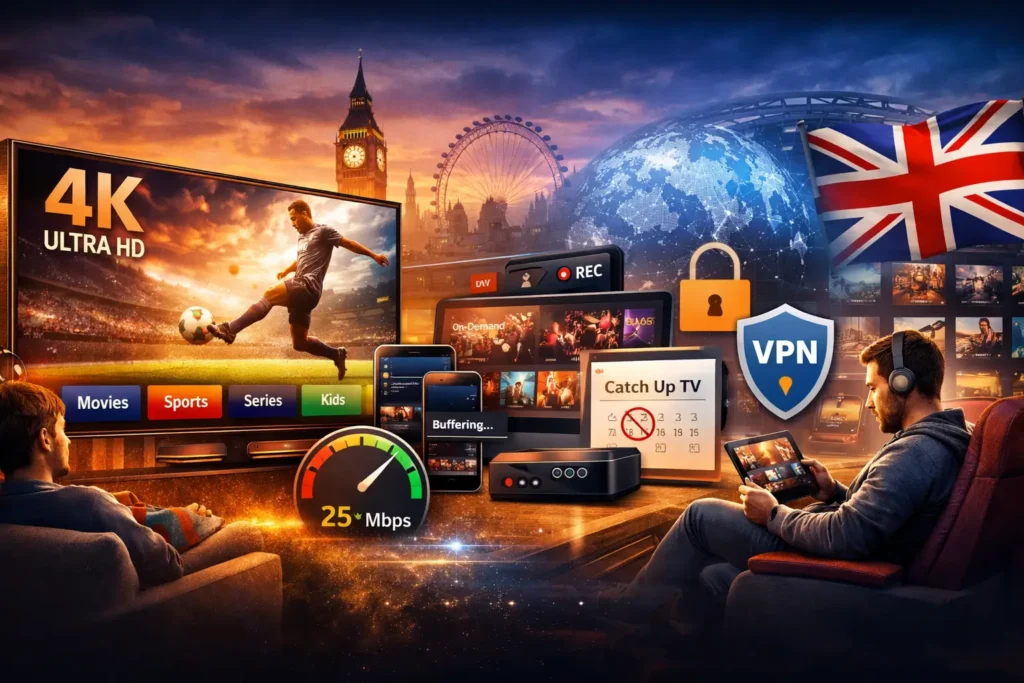
Something feels different lately when you sit down in the evening and turn on the TV. In many UK homes, traditional cable and satellite no longer feel like the default option. People want freedom, not schedules, and that’s exactly where United Kingdom IPTV 2026 starts to make sense for everyday viewers.
Instead of scrolling through rigid channels, more households are leaning toward on-demand IPTV streaming. The appeal is simple and very human: watch what you want, when you want, without planning your day around a TV guide. I’ve noticed it myself, people talk less about “what’s on tonight” and more about “what are you watching lately”.
This shift isn’t about technology hype, it’s about habits. Viewers want control, flexibility, and the ability to move from the living room TV to a tablet or phone without friction. Platforms offering modern IPTV streaming options in the UK are fitting naturally into that lifestyle, especially as daily routines become more mobile and less predictable.
Little by little, this change is reshaping how television fits into UK life. It’s no longer a fixed ritual at a fixed time, it’s something that adapts to the viewer, not the other way around.

Why television no longer fits into fixed schedules
If you talk to people across the UK today, you’ll notice the same small frustration coming up again and again. Traditional TV feels restrictive. Fixed schedules, repeated content, and limited control just don’t match how people live anymore. This is where United Kingdom IPTV 2026 quietly changes expectations, not by promising more, but by removing limits.
Viewers no longer plan their evenings around TV. TV now fits around them. That single change explains a lot.
What pushed UK viewers away from cable and satellite
The shift didn’t happen overnight. It grew from everyday annoyances that added up:
- Paying for channels that never get watched
- Missing shows because life got busy
- Switching rooms or devices and losing progress
IPTV solved these issues without making a big show of it. The moment people realised they could start watching in one room and finish somewhere else, traditional setups began to feel outdated.
How IPTV actually fits modern UK routines
Most households don’t think in terms of technology. They think in terms of convenience. IPTV simply works in the background while life moves on. Whether it’s a smart TV in the living room, a tablet in bed, or a phone during a commute, the experience stays consistent.
For many viewers, clarity around options matters, and pages like the UK IPTV pricing plans help them understand what flexibility actually looks like in real life. That’s one reason United Kingdom IPTV 2026 keeps gaining momentum.
The real reason this trend keeps accelerating
It’s not about features or marketing language. It’s about control. Viewers decide what matters to them, and IPTV respects that choice. No pressure, no forced schedules, no wasted time.
This is why traditional viewing habits keep fading. Television isn’t disappearing, it’s adapting. And in United Kingdom IPTV 2026, the viewer finally sits in the driver’s seat.
What finally made British viewers change habits
There wasn’t a single big moment when people in the UK decided to move on from traditional TV. It was more like a build-up of small frustrations. Bills that kept rising, content that didn’t match real interests, and schedules that never respected real life. That’s where United Kingdom IPTV 2026 quietly entered the picture and felt different almost immediately.
Instead of forcing viewers to adapt, IPTV adapted to them. And once that switch flipped, going back started to feel pointless.
Why pricing flexibility mattered more than people admit
Cost is part of the story, but not in the way most people think. It’s not just about paying less, it’s about paying only for what actually gets used. Short commitments, adjustable plans, and the freedom to stop or switch without penalties changed how people think about TV spending.
That mindset fits perfectly with United Kingdom IPTV 2026, where viewers expect subscriptions to follow their lives, not trap them.
How on-demand viewing reshaped daily routines
Once viewers tasted on-demand freedom, fixed schedules stopped making sense. Watching something because it fits your evening, not because it’s airing at a certain hour, feels natural now. IPTV slipped into daily routines quietly, early mornings, late nights, quick sessions on mobile, longer ones on the sofa.
That level of control is one of the reasons United Kingdom IPTV 2026 keeps pulling viewers away from old habits.
Content choice without feeling overwhelmed
More content doesn’t always mean better content. What people appreciate is relevance. United Kingdom IPTV 2026 platforms make it easier to find things that match personal tastes without endless scrolling. Over time, viewers build a viewing rhythm that actually feels personal, not random.
This balance between variety and simplicity is another reason United Kingdom IPTV 2026 feels more human than traditional TV ever did.
Best IPTV providers British viewers explore in 2026
Below is a simple snapshot of IPTV platforms UK viewers often look into when comparing options. The focus here isn’t hype, it’s clarity.
| IPTV Platform | What viewers usually like about it |
|---|---|
| British IPTV Sub | UK-focused experience and straightforward access |
| Best Subscription IPTV | Broad content coverage with flexible access |
| Buy IPTV Live | Clear plans and simple setup for everyday use |
Seeing options side by side helps people make decisions without pressure, which aligns perfectly with how United Kingdom IPTV 2026 is shaping viewer expectations.
Why this shift keeps accelerating
The truth is simple. IPTV respects time, habits, and choice. That combination is hard to beat. As more households experience that freedom, traditional TV keeps fading into the background.
In United Kingdom IPTV 2026, television doesn’t control the viewer anymore. The viewer controls television.
When picture quality became the minimum, not the selling point
For most people in the UK, sharp visuals are no longer something to get excited about. They’re simply expected. In United Kingdom IPTV 2026, HD and 4K streaming blend into everyday viewing without drawing attention to themselves. When the image looks clean, motion feels smooth, and nothing breaks immersion, viewers stop thinking about quality altogether. That’s usually the best sign that things are working as they should.
Getting there doesn’t feel technical. As long as the screen supports modern resolutions and the internet connection stays stable, everything else happens quietly in the background. People don’t tweak settings anymore, they just watch.
What actually matters for stable high‑quality streaming
Instead of obsessing over specs, most viewers learn a few practical truths through experience:
- A steady internet connection matters more than headline speeds
- 4K works best when bandwidth isn’t constantly shared or overloaded
- Consistency beats peak performance every time
Once these basics fall into place, United Kingdom IPTV 2026 stops feeling like a service and starts feeling like a habit.
Watching across devices without breaking the moment
Modern viewing rarely happens on one screen from start to finish. People move, rooms change, evenings evolve. IPTV adjusted to that reality naturally. Starting something on the living‑room TV and continuing later on a phone or tablet doesn’t feel impressive anymore, it feels normal.
This seamless handoff removed one of the biggest frictions traditional TV never solved. No rewinding, no searching, no starting over. Just continuation.
Time finally stopped controlling the viewer
Fixed schedules used to dictate how evenings looked. Catch‑up and time‑shifting quietly flipped that dynamic. Missing a programme isn’t a problem now, it’s just something you catch later.
Recording content also feels lighter than it used to. People save things casually, without planning days ahead. TV fits around life instead of competing with it, which is one of the reasons United Kingdom IPTV 2026 feels so natural to many households.
Discovering content without decision fatigue
Large libraries only help when they’re easy to navigate. What viewers appreciate most isn’t endless choice, it’s relevance. Watchlists grow naturally, suggestions improve over time, and finding something to watch stops feeling like a chore.
That balance between variety and simplicity is what ties the experience together. Many viewers notice this shift while exploring how IPTV features fit everyday UK viewing habits. By the time people think about it, United Kingdom IPTV 2026 has already reshaped how television fits into their daily routine.

What actually makes an IPTV setup work smoothly
Most problems people blame on IPTV aren’t really about the service itself. They come from small technical gaps that add up. In United Kingdom IPTV 2026, getting a smooth experience is less about chasing the latest tech and more about covering a few sensible basics.
A stable internet connection sits at the centre of everything. When it’s reliable, IPTV feels effortless. When it isn’t, no feature can save the experience.
Internet speed expectations in real life
Instead of guessing whether a connection is good enough, it helps to have a simple reference point. Not for marketing claims, but for everyday use.
| Viewing Quality | Internet speed that feels comfortable |
|---|---|
| Standard viewing | Around 5 Mbps |
| High definition | Around 10 Mbps |
| Ultra high quality (4K) | 25 Mbps or higher |
These numbers aren’t about perfection. They reflect what most UK households find stable during normal use in United Kingdom IPTV 2026.
A quick way to avoid common streaming frustrations
People usually figure this out after a few evenings of trial and error. Buffering often shows up when too many things are fighting for bandwidth at the same time.
A few habits tend to help:
- Checking connection speed once before blaming the service
- Avoiding heavy downloads while streaming
- Making sure the router isn’t struggling with too many active devices
Once these basics are in place, IPTV settles into the background and stops demanding attention.
Devices people actually use day to day
Compatibility is rarely an issue now. Most viewers use a mix of smart TVs, phones, tablets, and streaming boxes without thinking much about it. IPTV simply adapts to the screen that’s available.
Many users first understand this flexibility when browsing resources like practical IPTV setup guides for UK users, which explain how viewing can move naturally between devices in United Kingdom IPTV 2026.
Staying on the safe side without stress
Choosing a service that operates responsibly matters more than people admit. UK viewers tend to prefer providers that are transparent, stable, and clear about how their service works. That peace of mind keeps the experience relaxed instead of risky.
Thinking a little ahead
IPTV isn’t standing still. Better compression, faster connections, and smarter platforms are already shaping how viewing feels. The good news is that most setups don’t need constant upgrades. Staying informed and flexible is usually enough.
That mindset fits perfectly with United Kingdom IPTV 2026, where technology quietly supports viewing habits instead of constantly demanding change.

Where television in the UK is clearly heading
If there’s one thing that feels obvious now, it’s that television in the UK isn’t going backwards. It’s adjusting to how people actually live. In United Kingdom IPTV 2026, watching TV feels less like following a system and more like fitting entertainment naturally into daily life.
What made the difference wasn’t hype or promises. It was practicality. Flexibility, on-demand access, clear picture quality, and the freedom to move between devices slowly became expectations rather than bonuses. Once viewers experienced that level of control, traditional setups started to feel unnecessarily rigid.
Looking ahead, IPTV isn’t replacing television, it’s reshaping it. For many households, this way of watching already feels settled. Platforms that stay transparent, flexible, and easy to use are the ones people keep coming back to, especially when exploring options through places like UK IPTV viewing solutions designed for modern habits.
As habits continue to evolve, United Kingdom IPTV 2026 marks a point where choice, convenience, and personal rhythm finally sit at the centre of the viewing experience.
Frequently asked questions from UK viewers
What does United Kingdom IPTV 2026 actually mean for UK viewers?
It simply means television delivered through the internet instead of traditional broadcast systems. In practice, it allows viewers to watch content on their own schedule, across different devices, without being tied to fixed programming times.
Is using IPTV allowed in the UK?
Yes, IPTV itself is legal in the UK. The important part is choosing a service that operates responsibly and transparently. Viewers generally avoid issues by sticking with providers that are clear about how their service works.
What kind of internet connection feels comfortable for IPTV?
Most households find that standard viewing works well on modest connections, while higher quality streaming benefits from faster and more stable internet. Consistency matters more than headline speeds.
Can viewing move between devices easily?
In most cases, yes. Many people start watching on a TV and continue later on a phone or tablet. That flexibility has become one of the most appreciated aspects of United Kingdom IPTV 2026.
How does IPTV really compare to traditional TV now?
The biggest difference is control. Viewers decide when and how they watch, rather than adapting their day around a schedule. That shift alone explains why so many people prefer IPTV today.
Is it possible to adjust subscriptions over time?
For many users, yes. Flexibility around plans and commitment length plays a big role in why IPTV feels better aligned with real life.
DMCA Disclaimer
This website does not host, upload, store, or control any video content. All information provided is for educational and informational purposes only. Responsibility for content access and usage rests solely with the end user. Any external services or platforms mentioned operate independently and are not affiliated with this website.
